“MA GOES TO CAMPUS” REACHES YOGYAKARTA, STRENGTHENING STUDENTS’ JUDICIAL LITERACY
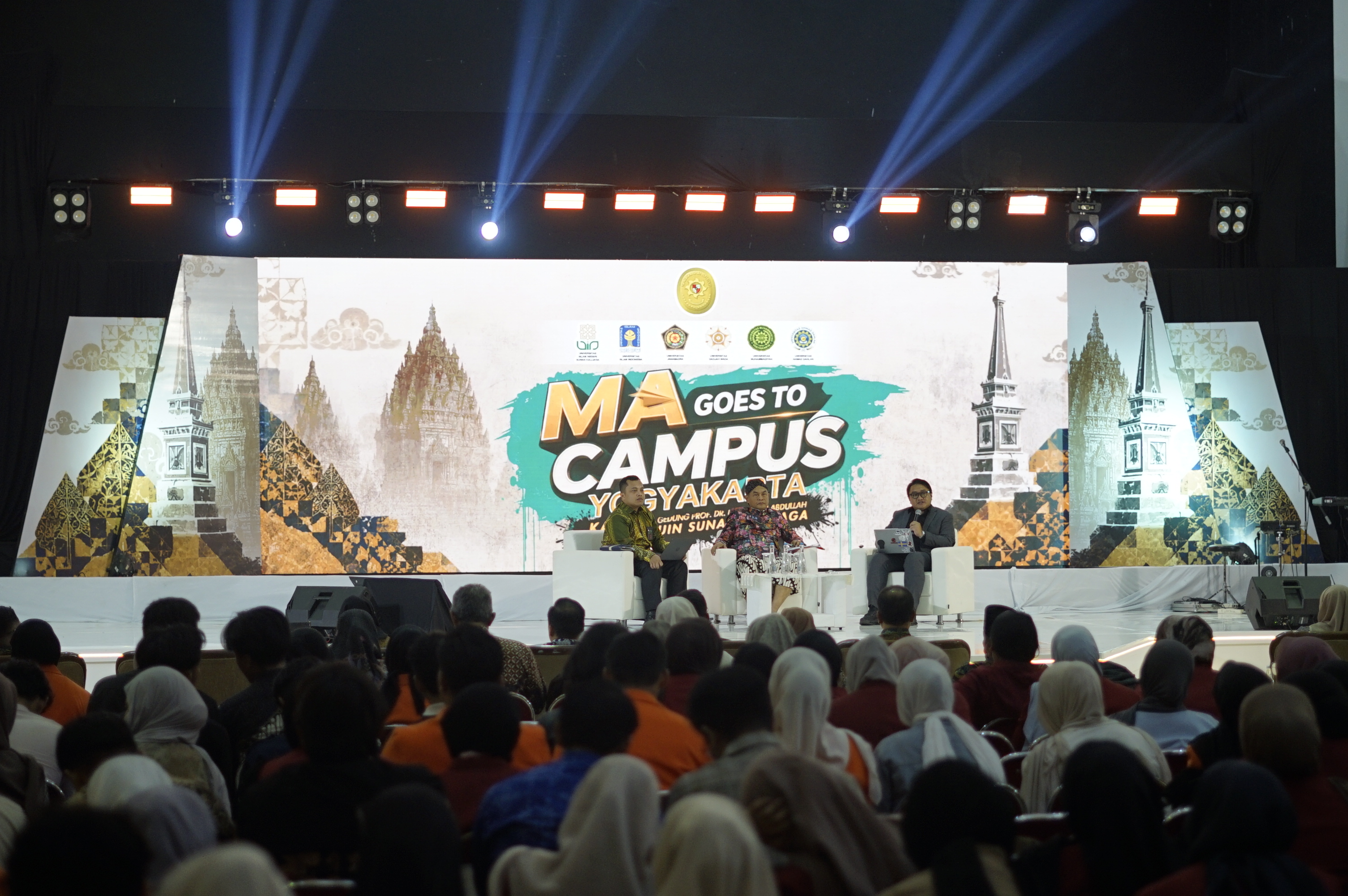
Yogyakarta – Public Relations: The Supreme Court of the Republic of Indonesia continued its MA Goes to Campus 2026 program at Sunan Kalijaga State Islamic University (UIN Sunan Kalijaga) in Yogyakarta on Thursday (June 25).
In his opening remarks, the Head of the Supreme Court’s Bureau of Legal Affairs and Public Relations, Dr. Andi Julia Cakrawala, S.T., S.H., M.T., M.H., emphasized that while technological competence is essential, integrity remains the most important quality for young people aspiring to build careers within the judiciary.
“No matter how extensive our knowledge, how high our academic achievements, or how prestigious our position, without integrity, all of it is meaningless,” he said.
Speaking before hundreds of students from universities across the Special Region of Yogyakarta, Dr. Cakrawala outlined the Supreme Court’s ongoing transformation toward a modern and technology-driven judiciary.
He explained that, in the past, court users had to visit the courthouse in person to register their cases, resulting in additional time and expenses. Today, however, many judicial services have been digitized, making court services more accessible, efficient, and transparent for justice seekers throughout Indonesia.
One of the major milestones in this transformation is the implementation of the e-Court system, introduced in 2018. The platform has now been fully implemented in courts across Indonesia, from Sabang to Merauke.
The Supreme Court has also developed e-Berpadu (Integrated Electronic Criminal Files), a digital platform that integrates criminal case administration among law enforcement agencies, including the Indonesian National Police, the Attorney General’s Office, the Corruption Eradication Commission (KPK), the National Narcotics Agency (BNN), and correctional institutions.
Responding to rapid technological developments, the Supreme Court has also introduced Smart Majelis, an artificial intelligence-based application designed to automatically assign panels of judges based on various factors, including judges’ expertise, experience, competence, workload, and the nature of the cases to be heard.
“Most recently, in response to the advancement of artificial intelligence, the Supreme Court developed Smart Majelis, an AI-based application that automatically assigns judicial panels by considering judges’ competence, experience, workload, and case specialization, ensuring that each case is handled by judges with the appropriate expertise,” Dr. Cakrawala explained.
He further noted that judicial transparency continues to improve through live-streaming services that enable the public to watch the pronouncement of cassation and judicial review decisions online.
Meanwhile, Dewi Indriyani, S.Si., M.Si., Head of the Inter-Institutional Relations Section of the Bureau of Legal Affairs and Public Relations, explained that MA Goes to Campus, which has been running since 2021, was specifically designed to strengthen engagement between the judiciary and higher education institutions.
“This program aims to bring the judiciary closer to the public, particularly academics and the younger generation, by providing a platform for dialogue and legal education,” she said.
She also highlighted the enthusiastic participation in this year’s event, which was attended by approximately 500 students representing several universities in the Special Region of Yogyakarta, including Sunan Kalijaga State Islamic University, the Islamic University of Indonesia, Ahmad Dahlan University, Muhammadiyah University of Yogyakarta, Gadjah Mada University, and Janabadra University.
Representing the host institution, Prof. Dr. Mochamad Sodik, S.Sos., M.Si., Vice Rector II of Sunan Kalijaga State Islamic University, welcomed the program and praised it as an important opportunity for students to engage directly with Indonesia’s highest judicial institution.
“This is a very meaningful occasion because it brings together the Supreme Court and students—the future leaders of our nation—in a forum dedicated to learning and dialogue,” he said.
In addition to introduce the Supreme Court’s judicial reforms, the event featured a series of public lectures delivered by distinguished judicial experts.
The Chief Judge of the Yogyakarta High Court, Prof. Dr. H. Herri Swantoro, S.H., M.H., presented a lecture on “The Competence and Authority of the High Court Following the Enactment of Law Number 20 of 2025 on the National Criminal Procedure Code.”
Meanwhile, the Vice Chief Judge of the Pandeglang District Court, Irwan Rosady, S.H., M.H., discussed “The Implementation and Development of Restorative Justice in Indonesia.” The session was moderated by Adji Prakoso, S.H., M.H., a Judicial Judge at the Supreme Court’s Bureau of Legal Affairs and Public Relations.
The event was also attended by Dr. Sobandi, S.H., M.H., Head of the Administrative Affairs Agency, heads of first-instance courts throughout the Special Region of Yogyakarta, representatives from participating universities, as well as echelon III and IV officials from the Bureau of Legal Affairs and Public Relations. (SK/DS/DI/Photo: ist/ Translation: azh)


